
The Headmaster
Play The Headmaster
The Headmaster Screenshots









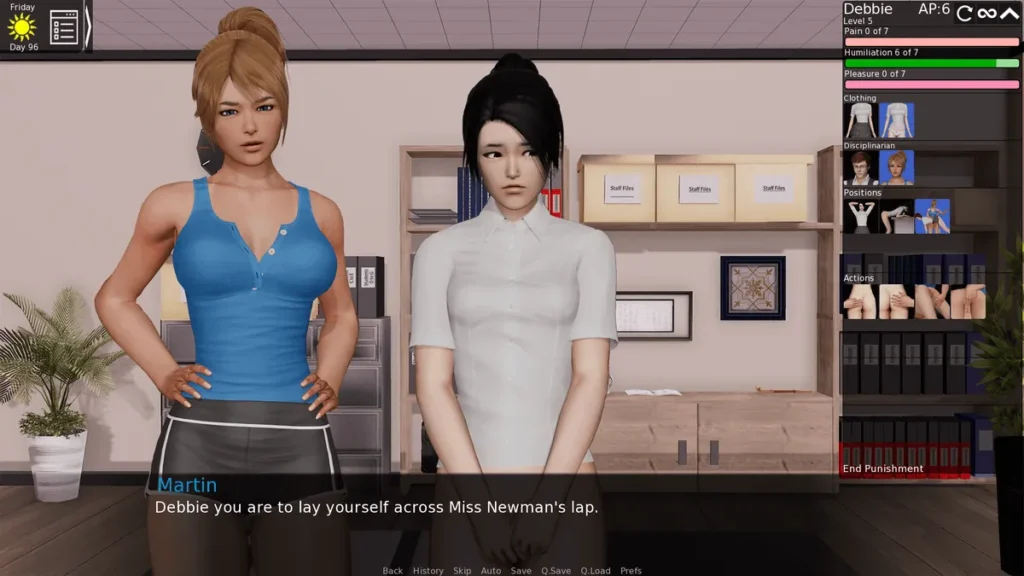
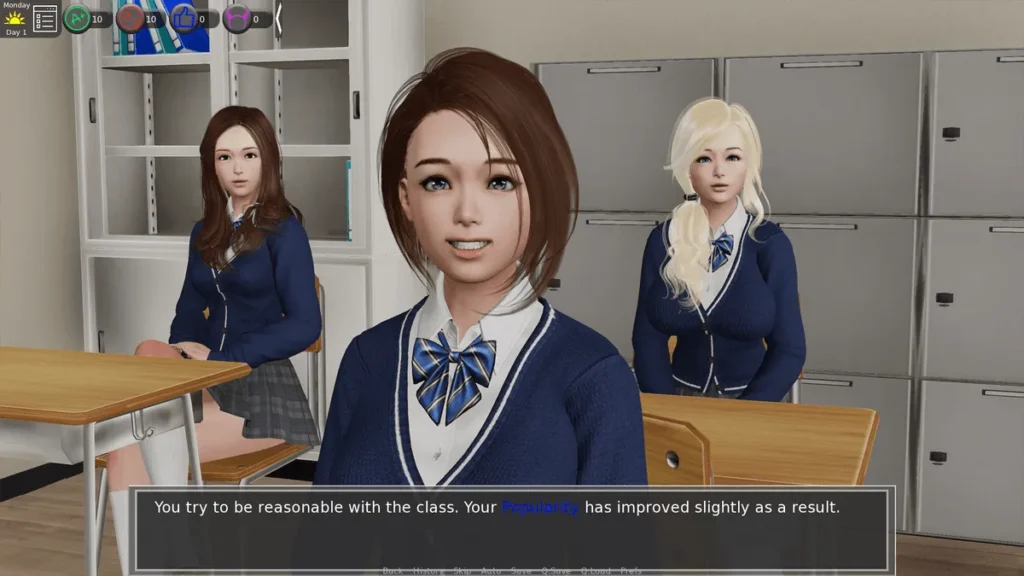
The Headmaster review
Master every quest, punishment system, and character interaction in this complex simulation
The Headmaster is a complex narrative-driven simulation game that challenges players to navigate school management, character relationships, and decision-making systems. Whether you’re a new player struggling with early-game progression or an experienced player seeking to unlock hidden content and complete all available quests, understanding the game’s intricate mechanics is essential. This comprehensive guide covers everything from basic gameplay fundamentals to advanced strategies for maximizing influence, managing character relationships, and completing the game’s extensive quest system. Learn how to approach the punishment mechanics, unlock special events, and make choices that significantly impact your gameplay experience.
Understanding Core Gameplay Mechanics and Quest Systems
Stepping into the role of The Headmaster isn’t just about giving orders; it’s about navigating a delicate web of power, personalities, and hidden agendas. 🕸️ The game presents you with a sprawling academy and a cast of complex students, but the real challenge lies beneath the surface in its intricate systems. If you’ve ever felt overwhelmed by the branching paths or frustrated by a sudden, harsh ending, you’re not alone. I remember my first playthrough: I thought I was being a firm but fair leader, only to trigger a game over because I completely misunderstood the fear vs submission balance. 😅 It felt unfair at the time, but that’s the genius of The Headmaster’s design—every choice has weight.
Mastering this complex simulation means understanding its core gears and levers. This guide will break down the essential The Headmaster game mechanics, from the unfolding mystery of the main quest to the nuanced dance of character relationships. We’ll demystify the influence points system, provide a crucial punishment guide, and explain how to safely navigate the game’s most unique features. Consider this your blueprint to ruling the academy without losing your head.
How the Main Quest Structure Works
Unlike linear games, The Headmaster employs a sophisticated, trigger-based narrative. The main quest walkthrough isn’t about following a checklist, but about exploring the academy, interacting with characters, and discovering secrets that progressively unlock new story beats. Think of it as a mystery novel where you must find the clues yourself.
The story advances primarily through key events and conversations. Spending time with students, successfully completing their personal tasks, and investigating specific locations will gradually reveal pieces of the overarching puzzle concerning the previous headmaster and the enigmatic “British Defense System Manufacturers.” 🕵️ This isn’t just background lore; it directly ties into your authority and the tools at your disposal. Early-game decisions, like which students you choose to assist first or how you handle initial disciplinary actions, can lock or unlock entire chains of events later on. The game is constantly evaluating your playstyle.
Progression is gated behind both narrative discoveries and relationship thresholds. You might need to reach a certain level of trust with a student before they confide a critical piece of information, or you may need to discover a hidden document in the library to unlock a new dialogue option with another character. This creates a beautifully organic sense of discovery, where your curiosity is directly rewarded with story content.
To help you plan your approach, here’s a breakdown of the primary quest archetypes you’ll encounter:
| Quest Type | Typical Unlock Condition | Primary Rewards |
|---|---|---|
| Story Revelation | Finding a hidden item or reaching a location at a specific time. | Narrative progress, new dialogue trees, access to restricted areas. |
| Character Assistance | Building a positive relationship level with a specific student. | Influence Points, unique character backstory, relationship stat boosts. |
| Disciplinary Action | Witnessing a rules infraction or receiving a report. | Submission or Fear increases, potential Influence Points, altered student behavior. |
| Administrative Duty | Progressing the main story or reaching a new game day. | Essential resources, minor narrative details, stability. |
Remember, rushing is your enemy. A methodical, observant approach is key to a successful main quest walkthrough. Talk to everyone, revisit rooms, and pay close attention to the time of day—many secrets are temporally locked! 🔑
Managing Character Relationships and Influence Points
At the heart of The Headmaster lie its character relationship mechanics. Every student is an individual with their own personality, history, and response to your authority. Your interactions aren’t just good or bad; they shape a multidimensional dynamic defined by stats like Trust, Respect, and Affection. A student might trust you deeply but have low respect for your authority, leading to a very different interaction than one who fears you but is secretly respectful.
This is where the influence points system becomes your most valuable currency. 💎 Influence Points (IP) are earned by successfully navigating interactions, completing personal quests for students, and making decisive leadership choices. They are not tied to intimidation or fear. You earn them by being a competent, attentive, and sometimes cunning Headmaster.
Personal Insight: I once focused solely on one student’s questline, maxing out my Influence Points with them early. This actually opened up a mediation opportunity later with another student I was struggling with, as the first student vouched for me. The character relationship mechanics are deeply interconnected!
Spending Influence Points is how you actively shape relationships and unlock opportunities. You might spend IP to:
* Gain a student’s confidence during a difficult conversation.
* Unlock a special, more personal favor or quest.
* Defuse a volatile situation without resorting to punishment.
* Inquire about sensitive topics related to the academy’s mysteries.
The key is balance. Investing all your points in one student can make them incredibly loyal, but it may leave you powerless to handle crises with others. The influence points system encourages you to be a strategist, deciding which relationships are most crucial for your current goals and the long-term narrative. Think of yourself as a gardener, tending to multiple unique plants—each needs different care to bloom. 🌸
Navigating the Punishment System and Fear vs. Submission Balance
This is arguably the most delicate and misunderstood aspect of The Headmaster game mechanics. The punishment guide isn’t about finding the “correct” button to press; it’s about understanding the psychological simulation at play. The system tracks two critical, opposing statistics: Fear and Submission.
- Fear is a raw, instinctual reaction. High Fear makes students compliant out of terror, but it breeds resentment, stifles genuine communication, and can lead to explosive, game-ending rebellions.
- Submission is a conscious, earned deference to your authority. It stems from respect, consistency, and a understood hierarchy. High Submission leads to orderly conduct and reliable behavior, but without a hint of fear, your authority might be challenged.
Your actions during disciplinary scenes directly affect this balance. The tools and methods you choose, the intensity you employ, and the frequency of your interventions all shift these hidden meters. This is the core of the fear vs submission balance. A perfect playthrough doesn’t seek to minimize both, but to manage them wisely for each student. Some may require a firmer hand to initially curb defiance, while others will shut down completely if exposed to too much fear.
This brings us to the most critical safety feature: the safe word system. 🛑 This is your emergency brake. During intense disciplinary actions, students have a chance to use their safe word. Ignoring this is the single fastest route to a bad ending. Respecting the safe word is non-negotiable; it immediately stops the scene, avoids trauma, and preserves a baseline of trust. It may feel like “losing” the encounter, but in the grand strategy, it preserves your ability to continue the game. I learned this the hard way after a single poor decision led to an immediate, permanent game over.
The punishment guide golden rule is: Never punish in anger. Always have a goal. Are you correcting a specific behavior? Testing a student’s limits to gauge their resilience? Or are you just venting frustration? The game knows the difference. Refusing certain actions or making merciful choices won’t penalize you—it will often steer the fear vs submission balance in a healthier, more sustainable direction. The old headmaster’s mystery is a constant reminder of what happens when power is exercised without restraint or understanding.
| Action Type | Typical Effect on Fear | Typical Effect on Submission | Risk Level |
|---|---|---|---|
| Verbal Reprimand | Slight Increase | Moderate Increase | Low |
| Moderate Corrective Action | Moderate Increase | High Increase | Medium |
| Harsh Disciplinary Measure | High Increase | Variable (Can Decrease) | Very High |
| Respecting Safe Word | Decrease | Slight Increase | None (Critical Practice) |
FAQ: Common Questions About Game-Ending Scenarios
- Q: What’s the most common mistake that leads to a bad ending?
- A: Ignoring the safe word system. Treat it as an absolute rule. The second most common is letting a single student’s Fear meter max out, triggering a breakdown that can end your game.
- Q: Can I recover from having very high Fear with a student?
- A: Yes, but it’s slow and difficult. It requires consistent, gentle interactions, granting freedoms, and completely avoiding further disciplinary actions with that student until the stat slowly decays.
- Q: Is it possible to finish the game without using punishment at all?
- A: While theoretically possible, it is extremely challenging. The game’s design expects you to engage with its systems. The goal isn’t avoidance, but masterful, deliberate application.
- Q: How do I know if I’m balancing Fear and Submission correctly?
- A: Watch the students’ behavior. Are they obedient but jumpy and reluctant to speak? Too much Fear. Are they friendly but frequently testing boundaries or breaking minor rules? Submission may be too low. Ideal balance is calm, orderly compliance.
Mastering The Headmaster game mechanics is a journey of patience, observation, and strategic empathy. It’s about understanding that true authority isn’t just wielded—it’s negotiated through every conversation, every decision, and every careful application of the rules. By internalizing this punishment guide, leveraging the influence points system, and respecting the profound character relationship mechanics, you’ll unlock the rich, layered narrative at the heart of this unique simulation. Now, go forth and lead—wisely. 👑
The Headmaster offers a deeply layered gameplay experience that rewards careful planning, strategic decision-making, and thorough exploration. Success in the game requires understanding how the interconnected systems of quests, relationships, and consequences work together to create a dynamic narrative. By mastering the core mechanics outlined in this guide—from managing influence points to balancing the punishment system—you’ll unlock the full potential of your gameplay experience. Whether you’re pursuing specific character storylines, investigating the mystery surrounding the previous headmaster, or aiming to complete every available quest, the strategies and information provided here will help you navigate the game’s complexities with confidence. Take time to experiment with different approaches, pay attention to how your choices ripple through the game world, and remember that many of the game’s most rewarding moments come from discovering hidden content and unlocking special events through careful observation and strategic planning.