
Randel Tales
Play Randel Tales
Randel Tales Screenshots









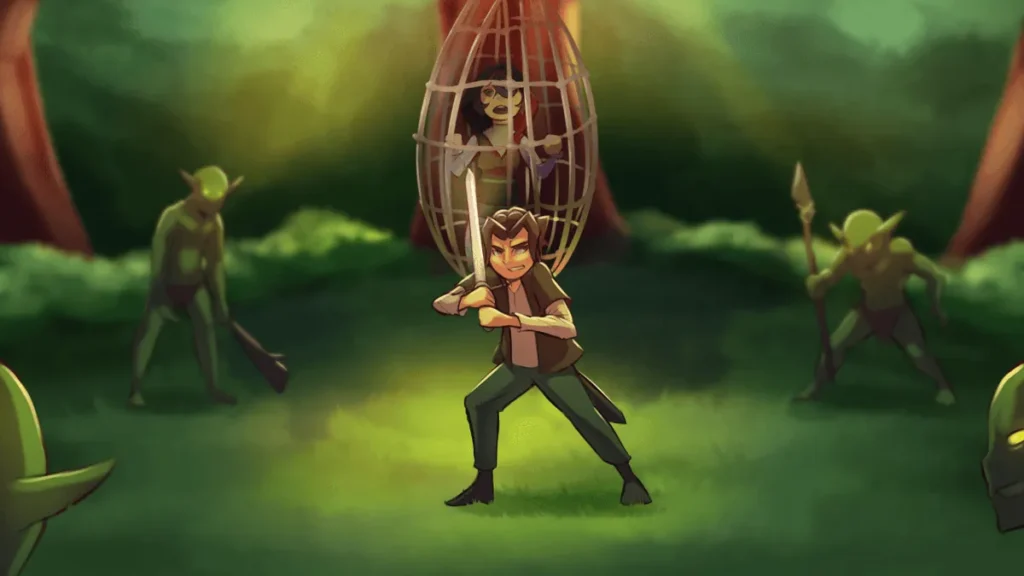






Randel Tales review
A deep dive into the mechanics, narrative choices, and character development that make this indie title stand out
Randel Tales has emerged as a notable indie title that combines engaging narrative design with interactive gameplay mechanics. This game distinguishes itself through meaningful character relationships, consequence-driven choices, and a unique stat system that influences player progression. Whether you’re interested in the academy setting, character development arcs, or the mechanics that drive decision-making, understanding what makes Randel Tales compelling requires examining its core systems, storytelling approach, and how it balances multiple gameplay elements. This guide explores the essential aspects that define the Randel Tales experience.
Core Gameplay Mechanics and Progression Systems
If you’ve spent any time with Randel Tales, you know the first few hours can feel… deliberate. 🐌 You’re thrown into the shoes of a new student, and the game isn’t in a rush to explain all its cards. This slow, immersive burn is part of its charm, but it can also lead to some genuine head-scratching moments, especially when it comes to building your character. You might earn a level and wonder, “Where are my new skills?” or face a skill check and think, “Was I supposed to know that?”
Don’t worry, you’re not alone. The beauty of this indie gem is how its systems slowly unfurl, rewarding patience and attention to detail. Once you crack the code, the character progression mechanics become a deeply satisfying puzzle. This chapter is your decoder ring. We’re going deep on the stats, the checks, the tests, and the growth that form the backbone of your adventure. By the end, you’ll not only understand the Randel Tales stat system, but you’ll master it.
Understanding the Stat Allocation System
Let’s cut straight to the point that causes the most early-game confusion. In many RPGs, you level up and a screen pops up asking you to assign points immediately. Randel Tales does things differently, and this is the first major “aha!” moment you need to have. You do control your point allocation, but not in the way you might expect. The game’s Randel Tales leveling system is tied to specific, in-world activities, not just combat experience.
Here’s the secret: you increase your core stats by studying and training at the academy. 🏫 Think of it less as “spending points” and more as “investing your time.” After a major story beat or at the start of a new academic term, you’ll often get free time. Choosing to hit the library to study Arcane Theory will, over time, boost your Intelligence (INT). Spending an afternoon at the training grounds practicing with a sword will boost your Strength (STR). This approach makes your progression feel earned and woven into the narrative.
So, what do these stats actually do? This is where the Randel Tales stat system truly shines, as each attribute influences a wide array of outcomes beyond simple damage numbers.
Personal Insight: On my first playthrough, I thought I could brute-force my way through like any other RPG. I pumped everything into STR and VIT. Imagine my surprise when I couldn’t pass a single history check in class, failed to decipher ancient magic runes, and my party members constantly questioned my leadership. The game was quietly telling me I’d built a lunkhead, not a hero. It was a brilliant, humbling lesson.
To save you from a similar fate, here’s a breakdown. Understanding this is the most crucial part of any point allocation guide for this game.
| Core Stat | Primary Influence | Secondary Effects & Playstyle Tip |
|---|---|---|
| Strength (STR) | Physical damage with melee weapons, carrying capacity. | Affects intimidation checks, certain physical obstacles. Essential for a front-line Guardian or a damage-focused Warrior build. |
| Dexterity (DEX) | Accuracy, evasion, damage with ranged/finesse weapons. | Critical for lockpicking, sleight of hand, and subtle maneuvers. The go-to for Scouts or archers. |
| Intelligence (INT) | Magical power, spell efficacy, mana pool. | Drives knowledge-based checks (history, arcana), puzzle solving, and dialogue options about strategy or lore. A must for Scholars and Mages. |
| Wisdom (WIS) | Mana regeneration, perception, insight. | Affects your ability to detect hidden items, see through lies, and understand social cues. Vital for supportive Clerics and perceptive leaders. |
| Charisma (CHA) | Persuasion, bargaining, social influence. | Your key to talking your way out of fights, getting better prices, and inspiring your party. The main stat for Diplomats and party faces. |
| Vitality (VIT) | Health points, resistance to poisons/ailments. | Governs endurance checks, affects recovery rate. Every build needs some, but Tanks and frontliners need it most. |
The best advice? Have a character concept in mind from the start. Are you a bookish mage? Prioritize INT and WIS. A silver-tongued rogue? DEX and CHA are your best friends. The game rewards specialization, especially during the challenging academy testing Randel Tales throws at you.
To help new players, here’s a step-by-step guide to recognizing and seizing progression opportunities:
- Step 1: Pay Attention to the Calendar. 📅 After main story events, the game will often transition with a prompt like “You have some free time before the next lecture.” This is your cue.
- Step 2: Visit Key Locations. Go to the Library, Training Grounds, Student Commons, or Alchemy Lab. Interact with the main objects there (bookshelves, training dummies, etc.).
- Step 3: Choose Your Activity. The game will present a menu of actions like “Study Advanced Formulae,” “Practice Archery,” or “Debate Philosophy.” Each clearly states which stat it will improve.
- Step 4: Be Consistent. Progression is incremental. Studying Arcane Theory once won’t max your INT. Choose activities that align with your desired build every time you get free periods.
- Step 5: Watch for Feedback. After several sessions, you’ll get a notification: “You feel your understanding of [subject] has deepened.” This signals a stat increase. Check your character sheet to see it!
Skill Checks and Academy Testing Mechanics
This is where your stat investments are put to the test—literally. Randel Tales uses a seamless skill check system gameplay that feels integrated into the world, not just a random dice roll pop-up. You won’t see percentages or dice; the game uses your stats and preparation as the silent arbiters of success or failure.
These checks are everywhere: convincing a stubborn merchant, finding a hidden path in the woods, identifying a mysterious creature, or recalling a crucial piece of lore during a conversation. The system is always running in the background. When you attempt an action, the game compares the relevant stat (e.g., CHA for persuasion, INT for lore, DEX for stealth) against a hidden difficulty threshold. Succeed, and new paths open. Fail, and the story adapts—sometimes leading to more interesting consequences than success would have! 💡
The pinnacle of this system is the academy testing Randel Tales sequences. These are not simple mid-terms; they are narrative set-pieces that brilliantly combine all the mechanics you’ve been engaging with. You’ll be tested on:
* Practical Application: Using your combat abilities in a controlled arena.
* Theoretical Knowledge: Answering questions based on in-game books you (hopefully) read in the library.
* Field Analysis: Identifying monster weaknesses, which directly ties into the monster book mechanics we’ll discuss next.
Case Study: I remember a botany exam where we had to identify a dangerous plant. I’d spent my free time hunting in the woods and filling my bestiary, not reading textbooks. I failed the written identification, but because my monster book had an entry on the plant from a prior encounter, my character had a flash of field experience during the practical exam, saving my grade! This cross-system integration is genius.
Failing a test isn’t always a game-over. It can change your reputation, alter which teachers mentor you, and lock or unlock different quest lines. It makes your academic journey feel uniquely yours. To excel, you must engage with the world holistically—talk to NPCs for hints, read the books on shelves, and practice your skills. The skill check system gameplay is the game’s way of asking, “Have you been paying attention?”
Character Progression and Ability Development
Now, let’s tie it all together. How do you go from a clueless student to a capable adventurer? The character progression mechanics in Randel Tales are a three-legged stool supported by your stats, your abilities, and your knowledge.
1. Leveling and Ability Unlocking: As mentioned, the Randel Tales leveling system is milestone-based. You gain a “level” after completing significant story chapters. This doesn’t give you raw stats—those come from studying. Instead, leveling up unlocks new ability slots and sometimes grants new core abilities for your class. You then learn these abilities by, you guessed it, engaging with the world. A new sword technique might be taught by the weaponsmaster after you impress him in training (STR/DEX). A powerful spell could be granted by a grateful spirit after you solve its riddle using high INT. Your abilities are literal rewards for your actions and stat investments.
2. The Monster Book – Your Secret Weapon: 🧠 This is one of the coolest monster book mechanics in any RPG. It’s not just a completionist log; it’s a tactical database. Every enemy you encounter starts as a “???” entry. By fighting them, using analysis skills (WIS), or finding research notes, you fill the pages. A completed entry doesn’t just give you lore; it reveals exact health ranges, weaknesses, resistances, and loot tables. This directly affects combat, making previously tough fights manageable. It makes the hunting side activity critically important for long-term success.
3. The Synergy Loop: This is the heart of the progression.
* Hunting fills your Monster Book, giving you combat advantages and resources.
* Resources can be used in alchemy or sold for funds to buy better gear.
* Studying increases your stats, which lets you pass more skill checks.
* Passing skill checks unlocks new quests and training opportunities.
* New quests provide the milestones to level up and unlock more ability slots.
* And the loop continues…
The early-game pacing, which feels slow, is the game carefully laying the foundation for this loop. It’s asking you to be a student first, a hero second.
Final Practical Advice for New Players: Embrace the slow start. Don’t rush. Talk to everyone, read the books you find, and try every activity at least once. Pick two stats to focus on based on your character fantasy, and one “dump” stat you’re okay being bad at—it will create memorable failure states. Regularly check your Monster Book and make filling it a personal goal. Most importantly, understand that in Randel Tales, your character’s growth is a direct reflection of how you choose to spend your time in its beautifully crafted world. Your journey from novice to master is earned, not given, and that makes every success profoundly rewarding. ✨
Randel Tales represents a compelling example of indie game development that prioritizes narrative depth and meaningful player choice alongside engaging mechanics. The game’s stat system, while initially confusing, creates a foundation for character progression that rewards exploration and experimentation. The narrative design stands out for its genuine consequences and emotional character moments that resonate with players long after completion. While the game shows signs of its extended development timeline through visual inconsistencies and occasional technical hiccups, these elements don’t significantly detract from the overall experience. For players seeking a game that combines interactive storytelling with functional gameplay systems and memorable character relationships, Randel Tales delivers a distinctive experience that justifies its place in the indie gaming landscape. Whether you’re drawn to the academy setting, the relationship mechanics, or simply the quality of character writing, Randel Tales offers substantial content worth experiencing.